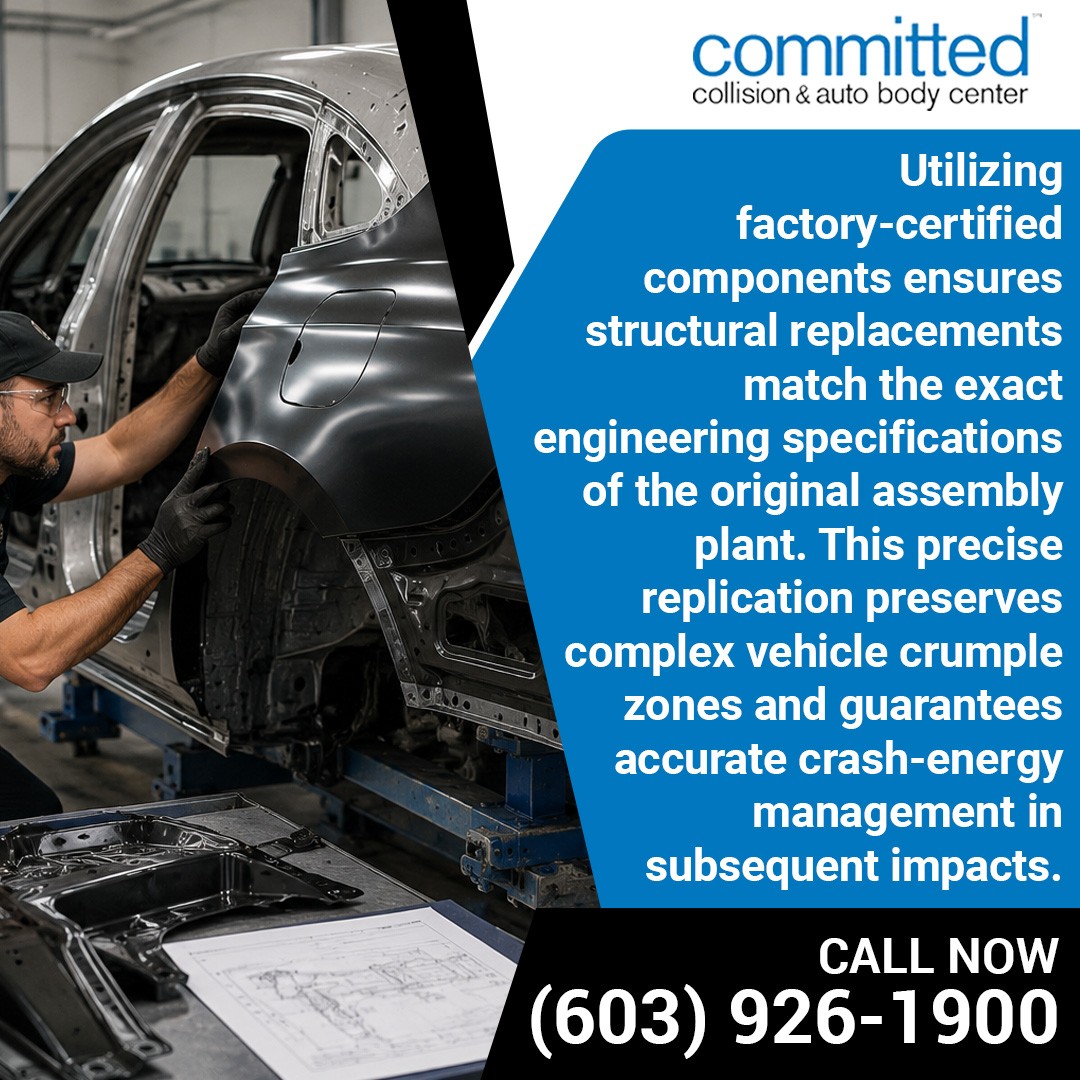
North Hampton, NH, July 31, 2026 — Late-model vehicles carry advanced structural materials, driver assistance sensors, and manufacturer-specific paint systems. So, the question of which parts go into a collision repair has become more consequential than ever. Committed Collision & Auto Body Center is a family-owned auto body shop in North Hampton, NH, serving the Seacoast since 2005. They highlight why Original Equipment Manufacturer (OEM) parts remain the standard for safe, lasting, professional auto body repair.
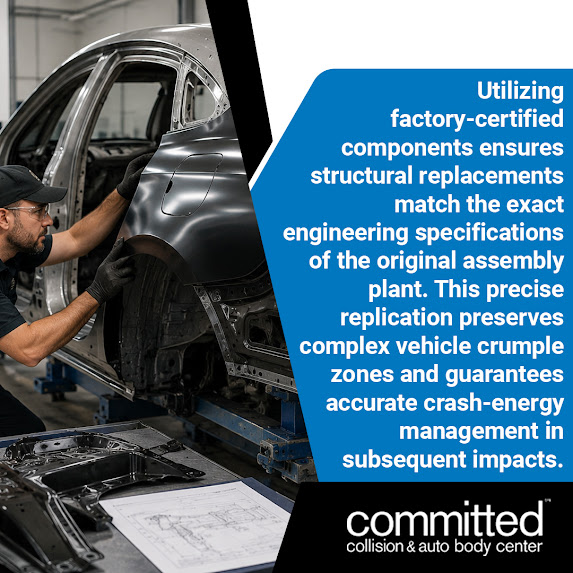
Why Parts Choice Matters More Than Most Drivers Realize
OEM parts are manufactured to the same specifications used at the vehicle's assembly plant. They match the original in dimensions, material composition, and structural design. Aftermarket alternatives are produced by independent suppliers and are not held to factory standards.
Testing by the Certified Automotive Parts Association (CAPA) found that nearly 90% of non-certified aftermarket crash parts fell short of factory standards. This is due to material substitutions, weaker retention components, and metals prone to early corrosion.
The implications go beyond aesthetics. A 2018 advisory from the Insurance Institute for Highway Safety (IIHS) stated that structural replacement parts must be an exact match to the original to preserve a vehicle's crash performance. Modern vehicles are built with engineered crumple zones and energy-absorption sequences. A structural component that differs in thickness, hardness, or geometry, even marginally, can alter how those sequences perform in a second impact.
Importance of OEM Parts for Auto Body Repair in North Hampton
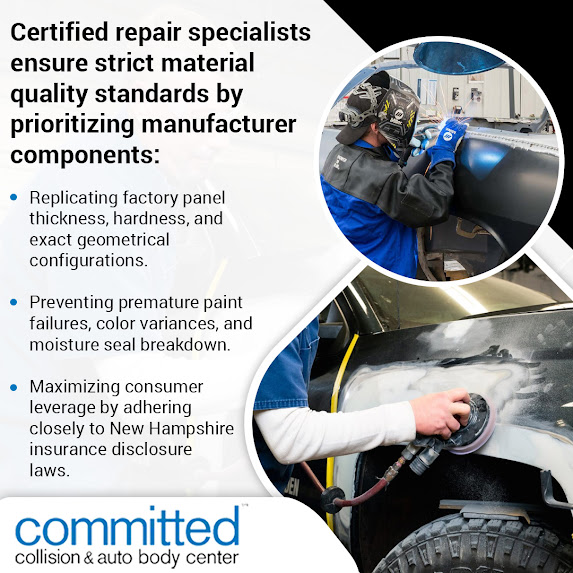
For NH Seacoast drivers, the stakes are compounded by regional conditions. Coastal salt air accelerates corrosion when non-factory panel gaps compromise water sealing. Paint systems applied to non-OEM substrates can also produce peeling, color variance, or micro-blistering that appears months after the repair.
"The parts that go into a vehicle after a collision are not a secondary consideration. They determine how the car performs if it's struck again, how long the finish holds, and what the vehicle is worth at trade-in. Drivers have a right to know what is being installed, and a reputable shop will document every component in writing before work begins," says Derek Lighthall, Owner, Committed Collision & Auto Body Center.
The shop uses the Chief 3D Laser Measuring System and Spanesi Touch Measuring System to verify structural alignment for professional auto body repair. For paint and finish restoration, technicians apply Glasurit 100 Line waterborne paint, used by over 80% of OEM manufacturers, through three USI Spray Booths. For minor damage that does not require panel replacement, the shop uses the Keco PDR and Glue Pull Station for paintless dent repair, preserving the original factory finish.
New Hampshire Law Gives Drivers More Leverage
NH RSA 407-D:3-a prohibits insurers from requiring aftermarket parts on vehicles under two years old with 30,000 miles or fewer. RSA 407-D:4 requires insurers to disclose in writing any estimate based on aftermarket parts. Failing to do so is a violation subject to penalties under RSA 417.
"We work with all major insurance providers, and make sure our customers understand what they are entitled to under New Hampshire law. An informed driver is in a much stronger position on parts decisions throughout the auto body repair process," Lighthall, added.
What Drivers Should Ask Before Authorizing Any Repair
The shop advises NH Seacoast vehicle owners to ask any auto body repair shop four questions before authorizing work:
-
Are factory parts prioritized and documented in writing?
-
Does the facility hold I-CAR Gold Class certification?
-
Do technicians follow the vehicle manufacturer's repair procedures?
-
What warranty covers parts, paint, and workmanship?
Every repair at Committed Collision & Auto Body Center is backed by a limited lifetime warranty on workmanship, paint, and part performance.
Get a Written Estimate from a Trusted Auto Body Repair Shop in North Hampton, NH
Drivers seeking auto body repair in North Hampton, NH, can request a free, no-obligation estimate from Committed Collision & Auto Body Center by calling (603) 926-1900 or emailing info@committedcollision.com. Their team of skilled professionals delivers excellent workmanship with unparalleled customer service.
About Committed Collision & Auto Body Center
Committed Collision & Auto Body Center is a family-owned collision repair facility located in North Hampton, New Hampshire, serving the Seacoast region and surrounding areas since 2005. The shop holds I-CAR Gold Class certification and employs ASE-certified technicians trained annually on modern vehicle repair standards. The facility is equipped with advanced structural measurement systems, waterborne paint spray booths, and ADAS calibration technology. Committed Collision specializes in OEM-compliant repairs backed by a limited lifetime warranty on workmanship and parts. Operating hours are Monday through Friday, 8:00 a.m. to 5:00 p.m.
Media Contact
Derek Lighthall
Owner, Committed Collision & Auto Body Center
203 Lafayette Road,
North Hampton, NH 03862
Phone: (603) 926-1900
Email: info@committedcollision.com
Website: https://committedcollision.com/

