North Hampton, NH – A car accident does more than damage bumpers and body panels. Modern vehicles rely on advanced sensors and cameras to power safety features, and even a minor collision can throw these systems out of alignment. Committed Collision & Auto Body Center, recognized as one of the best collision repair shops in North Hampton, NH, explains why sensor calibration has become a vital part of auto collision repair.
Why Sensor Calibration Matters After an Accident
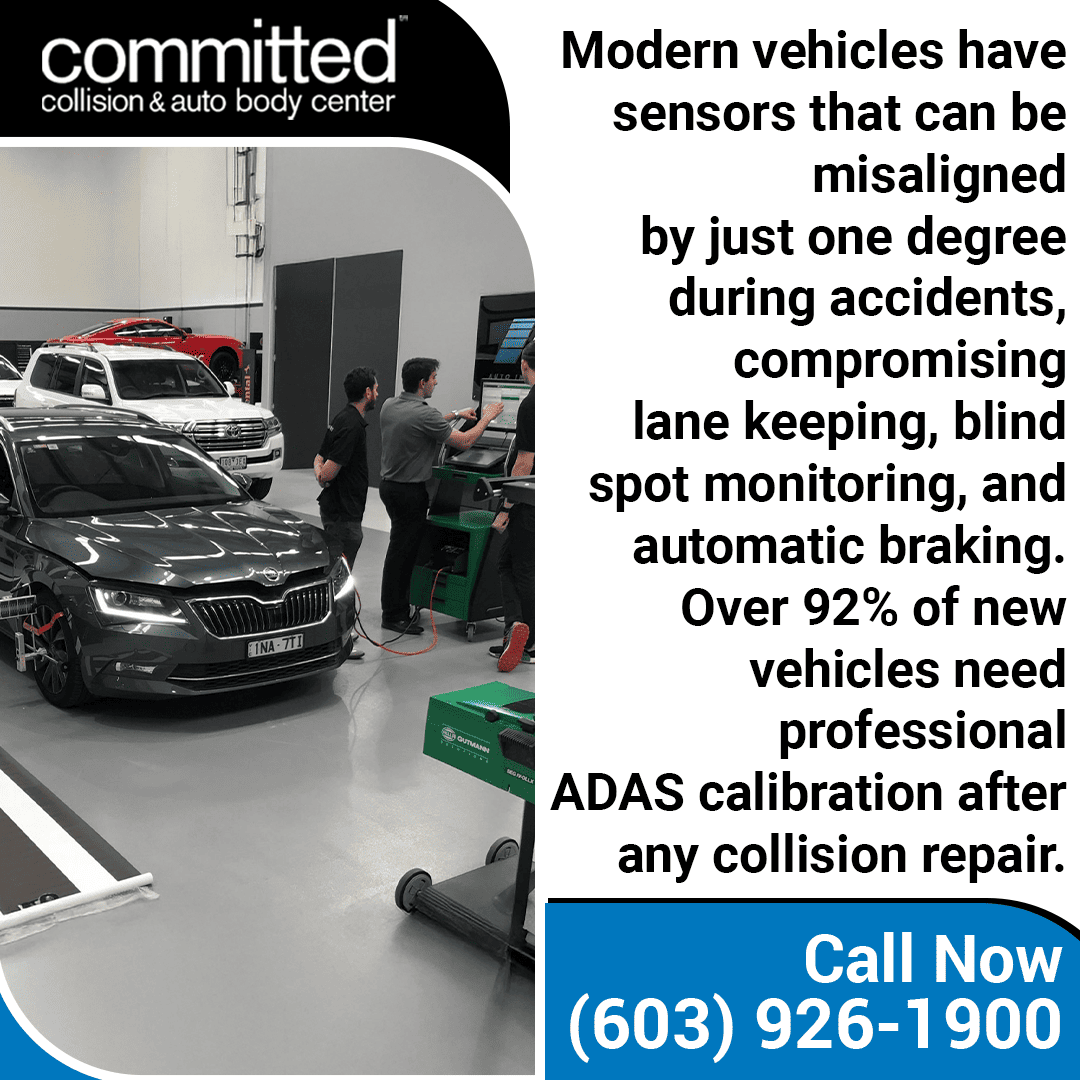
Today’s late-model vehicles are built with Advanced Driver Assistance Systems (ADAS) that include forward-facing cameras, radar detection, ultrasonic parking sensors, and even LiDAR in some models. These systems provide critical features like lane keeping, blind spot monitoring, and automatic emergency braking. When sensors are even slightly misaligned during a crash, the vehicle’s safety systems may malfunction without an obvious warning.
According to industry data, more than 92 percent of new vehicles now come equipped with ADAS. A sensor off by just one degree can cause miscalculations that compromise accident avoidance technology.
What Sensors Do and Where They Are Located
Modern vehicles use multiple sensor types to create a full safety network:
- Forward cameras mounted near the windshield power lane assistance and collision warning systems.
- Radar sensors located in bumpers manage adaptive cruise control and cross-traffic alerts.
- Ultrasonic sensors in bumpers assist with parking maneuvers.
- Side cameras in mirrors or pillars contribute to 360-degree monitoring.
The precision required is so high that even minor fender benders can shift these components out of position.
How Collision Damage Affects Vehicle Sensors
Different types of accidents impact different sensors:
- Front-end collisions often disturb forward cameras and radar units hidden behind the grille.
- Rear-end impacts can misalign blind spot monitoring systems in the rear bumper.
- Side collisions affect sensors in mirrors and doors that control lane change assistance.
These problems are not always visible. That is why professional collision repair specialists recommend diagnostic scanning and calibration after every crash, even when the damage seems minor.
Why Calibration Is Required for Modern Collision Repair
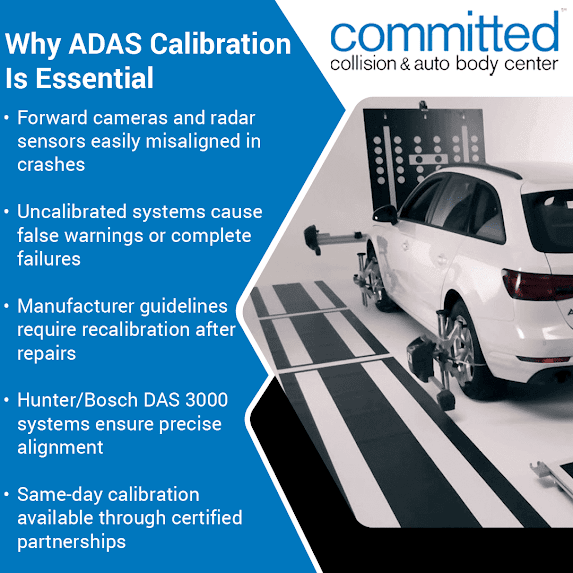
Auto manufacturers set strict guidelines requiring recalibration any time a windshield, bumper, or alignment is adjusted. Without calibration, safety systems may not respond correctly.
There are two common procedures:
- Static calibration performed indoors with specialized equipment and targets.
- Dynamic calibration requires controlled driving conditions so sensors can self-adjust.
Failing to follow manufacturer standards risks warranty issues, insurance complications, and serious safety concerns.
Safety and Legal Risks of Driving With Uncalibrated Sensors
When sensors are not calibrated, drivers may experience false warnings, delayed responses, or complete system failures. Automatic braking may fail to activate, or blind spot detection may not recognize nearby vehicles. Insurance companies now factor ADAS maintenance into accident investigations, and liability can fall on drivers who ignore calibration requirements.
Committed Collision & Auto Body Center’s Process for Restoring Safety
At Committed Collision & Auto Body Center, safety is integrated into every repair plan. The process includes:
- Pre-repair diagnostic scanning to identify affected systems.
- Manufacturer-specific procedures that follow OEM standards for calibration.
- Advanced calibration equipment, such as Hunter/Bosch DAS 3000 systems.
- I-CAR Gold Class certified technicians with updated training.
- Quality verification and documentation for insurance and warranty compliance.
This car collision repair shop also works with Automotive Alignments & Calibrations LLC to provide same-day recalibrations. Their collaboration allows drivers to leave with vehicles that are both repaired and safe to operate.
When Calibration Becomes Essential
Certain repairs almost always require recalibration, including:
- Windshield replacements
- Bumper repairs or replacements
- Suspension or alignment adjustments
- Warning light activations related to ADAS
Skipping this step can reduce resale value and increase long-term repair costs.
Committed Collision & Auto Body Center: Protecting Drivers With Complete Auto Collision Repair in North Hampton, NH
Modern collision repair involves more than restoring appearance. It requires expert knowledge of sensor systems that protect drivers on the road. Committed Collision & Auto Body Center has served North Hampton for more than 20 years, providing trusted body collision repair with advanced calibration capabilities.
Vehicle owners should turn to a collision repair specialist who restores both the structure and the safety systems of their car. Contact Committed Collision & Auto Body Center at (603) 926-1900 or info@committedcollision.com for the best auto collision repair in North Hampton, NH. The company provides comprehensive body collision repair, ADAS sensor calibration, and advanced diagnostics for late-model vehicles. With I-CAR Gold Class certification, modern equipment, and a dedication to safety, they have built a reputation as the best collision repair shop in North Hampton, NH.

